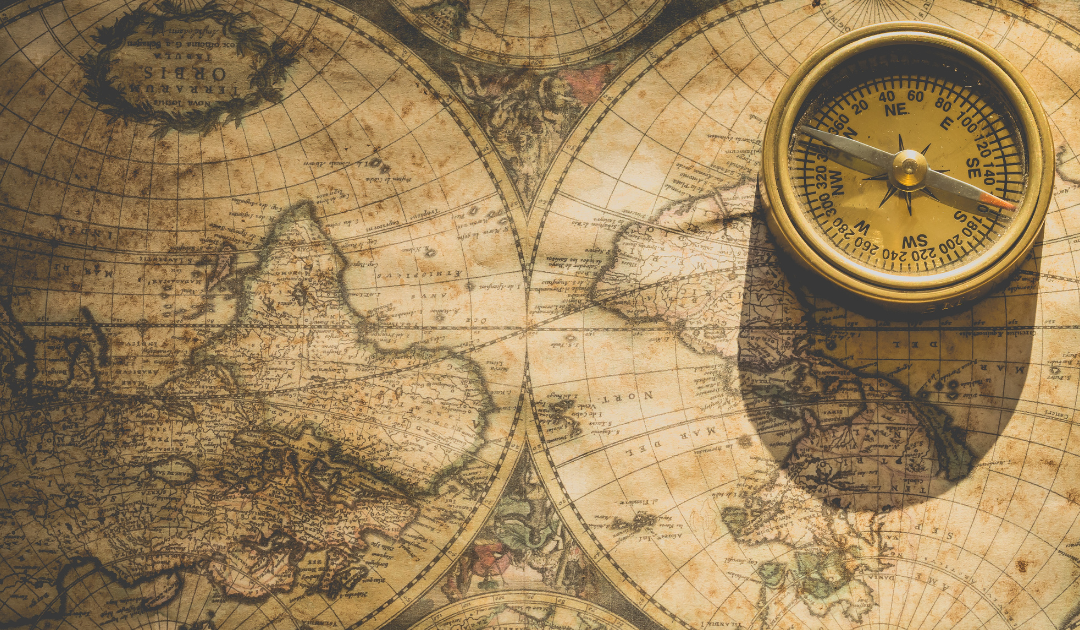
This is something that does not get said enough in wellness spaces.
Western ways of knowing are not necessarily wrong. They are just looking from one angle only.
Any framework, no matter how precise, has edges. There are things that cannot be seen from one vantage point. Not because the people using the frameworks are incompetent, but because every map has a frame, and the frame determines what makes it onto the page.
The question worth asking is not whether the current map is good. It is whether it is complete.
How East Asian Medicine Was Actually Built
Most people assume East Asian medicine (EAM) is either ancient mysticism or folk remedies with philosophical language.
It is much more complicated than that.
EAM was built the way any naturalist builds a body of knowledge. Careful observation of processes over long periods of time. Watching what happened to bodies across different seasons, different life stages, different conditions. Looking for what repeated. Recording the patterns. Testing them against the next generation of observations.
There were no labs and no double-blind studies. Just like ecology uses different tools than pharmaceutical research, EAM uses different tools than western medicine.
But the methodology is recognizable. It uses the same focused, rigorous attention to pattern that underlies any empirical tradition. The difference is that EAM was watching the human body the way an ecologist watches an ecosystem, looking for the relationships between systems rather than isolating variables.
That distinction matters.
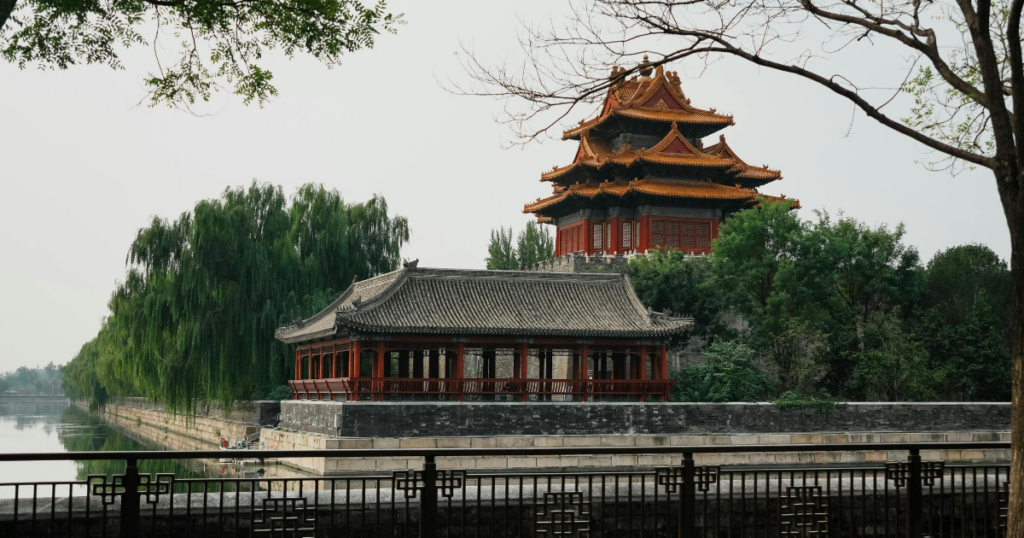
It Is Not a Relic. It Is a Different Tradition.
There is a version of this conversation where someone says “but it’s thousands of years old” as if age disqualifies a framework.
The observation that the earth orbits the sun is also thousands of years old. We did not throw that out when better telescopes arrived. We refined the model.
EAM has never been a static system frozen in the Han dynasty. It absorbed Arabic medicine, Japanese refinements, Korean developments, and now engages seriously with neuroscience and biomedical research. The frameworks that held up under scrutiny stayed. The ones that didn’t were revised.
That is not alternative medicine. That is how a living intellectual tradition works.
What a Single Frame Misses
I have a biology degree from Michigan Tech. I spent years thinking in the western scientific tradition before I spent years training in East Asian medicine.
What I have now is two lenses. And the thing about having two lenses is that you start to notice the edges of each one.
I have seen the same pattern enough times that I stopped dismissing it as coincidence. People come in with symptom pictures that don’t fit neatly into a western diagnostic category. Fatigue that labs can’t explain. Pain that moves around. Neurological symptoms that come and go. Multiple doctors, multiple dead ends, multiple “just keep taking the migraine medication” conversations.
When I look at those symptom pictures through the EAM lens, something different comes into focus. Not a diagnosis I can hand out, but a pattern that points somewhere specific.
More than once, that pattern pointed toward something like Lyme disease or RA. More than once, I encouraged someone to go back and push harder for the test, to self-advocate with their doctor, to not accept “we don’t know” as a final answer.
More than once, they got the diagnosis they needed.
I am not telling that story to position myself as the one who figured it out. The doctors did the diagnosing. But I was looking at a different map, and the different map caught something the other kept missing or dismissing.
That is not a critique of western medicine. It is an argument for having more than one way to see.
Building a New Model
R. Buckminster Fuller said it better than I can. “You never change things by fighting the existing reality. To change something, build a new model that makes the existing model obsolete.”
EAM does not fight western medicine. It builds a different model alongside it.
And the model it builds is one that most people raised inside western cultural assumptions have never had access to. Not because it was hidden from them, but because we tend to hand people the map we grew up with and assume it covers the whole territory.
It does not.
The Practice
Here is what I suggest you try to actually experience this instead of just read about EAM frameworks.
For one week, observe yourself the way a naturalist would observe a field.
When do you wake up naturally, before an alarm pulls you out? When does your energy peak? When does your thinking get sharp and when does it go muddy? What time of day do you get irritable without an obvious reason? When does your digestion feel easy and when does it feel stuck?
Write it down if you want. Or just notice without writing anything.
The most important part is to do this without judgment, as best you can. Because a lot of what you will notice has already been interpreted for you by the framework you were born into. The 5 AM productivity gospel. The “push through the afternoon slump” advice. The assumption that your natural rhythms are inconveniences to be optimized around.
They are not inconveniences. They are data.
EAM has been reading that data for centuries. Once you start seeing it, the map starts to make a different kind of sense.
The Only Real Question
You can keep working with the single map you were handed.
It will get you far. It has gotten you this far.
But if you are reading this, something in that map is probably not accounting for something you are experiencing.
That gap is worth paying attention to.
The model that makes the existing one obsolete is not a rejection of everything you already know. It is a wider frame.
And a wider frame changes what you are able to see.

Thank you, Amy, for the insightful observations you present regarding two different ways of knowing our bodies through different maps. Our own observations of patterns in our bodies/lives (physical, mental, emotional, spiritual) that I learned more while studying tai chi and qigong gave me that different map which has been a doorway to seeing my dis-ease in health of every type, and understanding more each day of how much knowledge is available simply by noticing. Yes, let’s allow for more than one way of seeing, and allow for more possibilities of living with more ease.
Yes, the noticing is everything, isn’t it? Thank you for reading and sharing this. 🫶🏻