What East Asian medicine knows that your Google Calendar doesn’t
You were trained to manage time.
There is a calendar for your kids’ activities, one for work, one for your boss’s meetings, and at least three color-coded systems trying to hold it all together. With all of that, there is one calendar you have never looked at. It is the one your body has been tracking the whole time.
The Calendar That Really Matters
In Eastern Traditions: you don’t observe nature to feel more connected to it. You observe it because it tells you what’s happening inside your own body.
The assumption built into the whole system is that what happens outside happens inside too. You are not separate from what surrounds you. The cycles running through the natural world are running through you.
The solar calendar is one of the tools for reading those cycles.
Seasonal markers
Most people are familiar with four seasons. Spring, summer, fall, winter. In East Asian medicine, each of those seasons has a different energy, a different direction, and different demands on the system.
But they don’t start when you think they do.
Each season starts about six weeks earlier than most people expect based on the astronomical calendar used in the west. In the East Asian calendar the seasons change at what the solar terms calendar calls the “Beginning” markers. Beginning of Spring. Beginning of Summer. Beginning of Autumn. Beginning of Winter. The solstices and equinoxes, when we usually say the season begins, are the midpoints of the seasons.
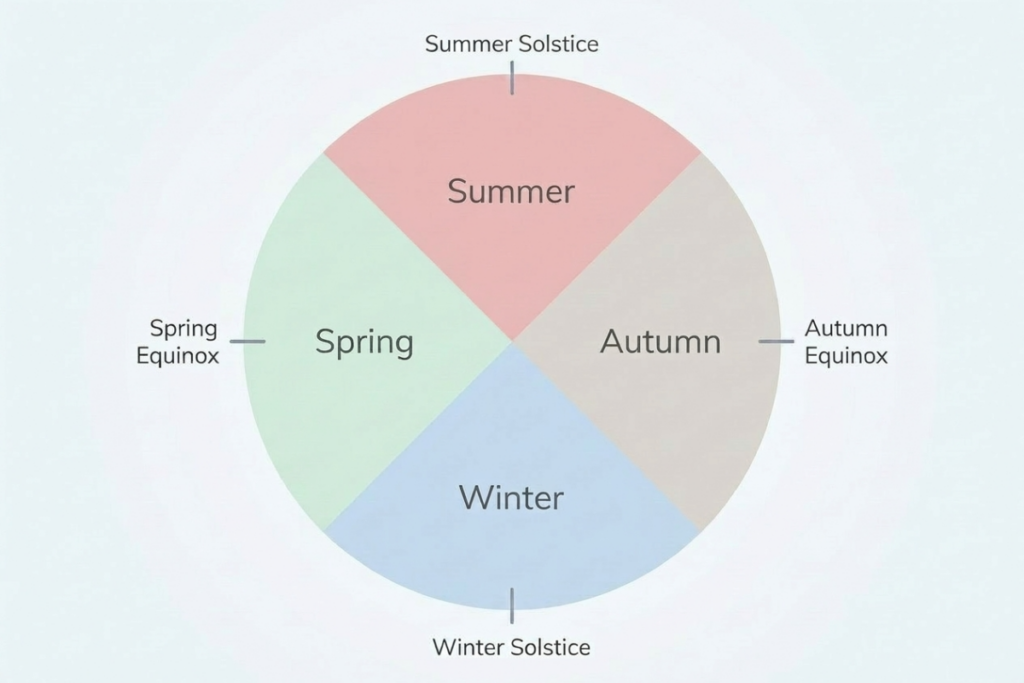
This is why the Chinese New Year is celebrated in early February. The solar term Li Chun, Start of Spring, arrives around February 4th or 5th. Preparations and celebrations begin then and carry through the Lunar New Year, the first new moon that follows that solar term.
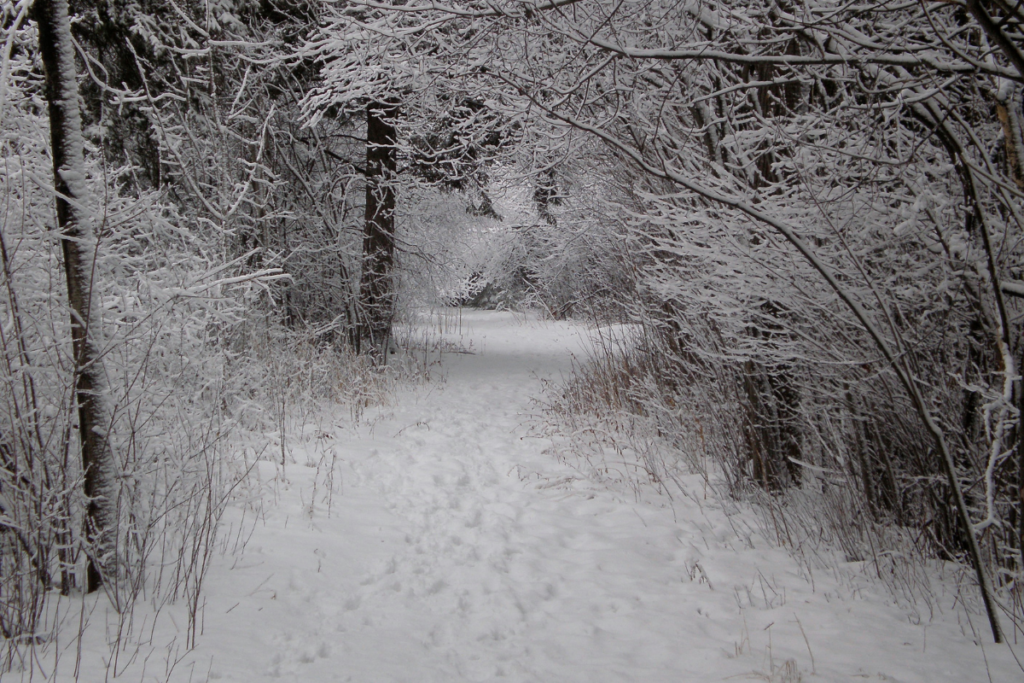
And although there is still a lot of snow on the ground in much of the Northern Hemisphere at that point, we can see shifts happening right around that time. One really obvious, unconscious shift is that gardeners feel the quickening and start pulling out their seed catalogs to plan. Most of us in snowy regions assume that is just relief after a long winter. I would argue the solar signal, the changing light levels, have something to do with it too.
The season has already shifted. The body knows.
Let’s zoom in…
Within each season, the calendar breaks down further.
These divisions are called the solar terms (jieqi). There are twenty-four of them across the year, each one lasting about fifteen days. Even if they don’t match exactly what is happening in the natural world where you live, they describe the direction of qi at that moment based on the light levels received from the sun.
The names are poetic and descriptive: Grain Rain. Awakening of Insects. White Dew. Start of Winter.
Think of them as a map to light levels, the level of yang energy coming into the system and a major signal flipper on earth. Every fifteen days or so, the sun hits a new point in its arc. The signal changes. Every plant, animal, fungus, and bacterium on this planet is built to receive the electromagnetic signal, including you.
This calendar is based on the position of the sun. Not the weather. Not the forecast. Not what it looks like outside your window.
The signal is moving whether you’ve acknowledged it or not.
Why does it matter?
Here’s where this gets personal.
Even though we have this changing signal throughout the year, most people keep running the same internal program all year. Same expectations, same pace, same output demanded from a system that is biologically built to shift with the light.
That mismatch has a cost.
When the signal is asking you to do one thing and you’re demanding something else, that is friction. And friction costs energy.
It’s not that you fall apart in February but the signal then asks you to conserve, and you are habituated to keep pushing yourself for summer-level output.
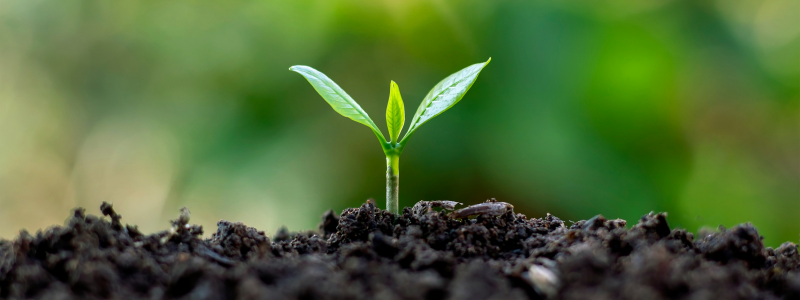
The energy in spring pushes upward like a seed pushes through soil, relentless and directional. It requires focused energy and allowing things to unfold with time. And if you have a deadline, you end up trying to hold it at a steady output level.
Nobody told you the signal existed. So when things feel difficult, the method gets the blame.

The Energy Peaks
In the US, summer solstice kicks off summer celebrations big time (4th of July through Labor Day).
What most people don’t know is that in the solar calendar, it’s not the start of summer. It’s the middle.
Xia Zhi, or “Extreme of Yang,” is the name of the solar term at the solstice. It happens around June 21st every year. The sun reaches its highest point. Yang energy peaks. And then it starts turning back.
In the solar calendar, summer began in early May. The solstice is the midpoint, the moment the signal starts moving in the opposite direction. Yin starts to rise again. That means by the time most people are firing up the grill for the summer celebrations, the body is already past the peak and beginning to wind down.
Everything around you got that same signal in May and immediately started moving. The growth you see in your yard at solstice started all those weeks ago.
The solstice is the peak, it is when the light crests. And if your tank is already low at that crest, it catches up to you.
So what are you supposed to do?
You don’t have to make any dramatic changes right now.
But I’d like to suggest you stop treating your energy like it’s supposed to be the same every month and in every season.
You have a rhythm. It has always been there. It was running before you started optimizing your morning, before the to-do list, before any of it.
Each time you ignore the environmental factors around you and push through, you pay for it.
And at some point, pushing stops working and your system simply says no.